
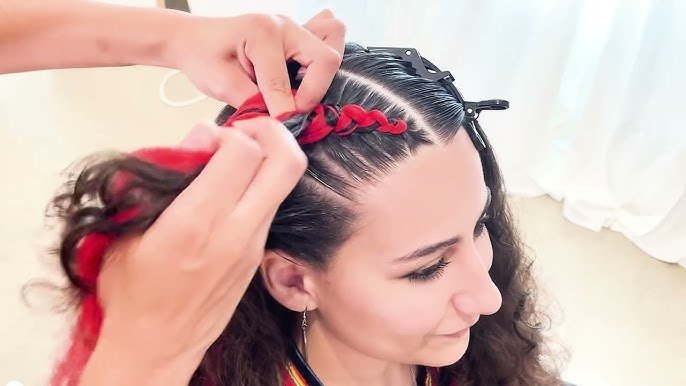
How To Braid Hair With Extensions For Beginners
The Ultimate Step-by-Step Guide You’ll Actually Need
Submitted by Beautyfusionuk
Braiding hair with extensions is one of the most transformative hair styling skills you can learn. Not only does it add length and volume, but it also unlocks endless hairstyle possibilities – from classic three-strand braids to stunning feed-in, Dutch, and fishtail styles. Yet, many tutorials only scratch the surface with basic steps.
In this comprehensive guide, we’ll cover everything most articles don’t cover — including choosing the right type of extensions, starter mistakes to avoid, scalp care, and maintaining your braids long-term. Whether you’re a total beginner or someone who has tried and given up, this is the only guide you’ll need.
Why Learn To Braid With Extensions?
Braids are timeless. They look beautiful whether you’re going to the gym, work, or a night out. Adding extensions enhances volume and gives you creative freedom — but beginners often struggle with the basics, like blending natural hair with extension hair or keeping the braid secure.
While many guides on Google give basic instructions, they often miss:
✔ How to choose the right type/texture of extensions
✔ How to prepare your natural hair + scalp before braiding
✔ How to blend extension hair seamlessly
✔ Common beginner mistakes and how to fix them
✔ Ways to care for braids so they last longer
This article fills all those gaps.
What You’ll Need (Tools & Supplies)
Before you begin, make sure you have the right tools:
- Combs: rat-tail comb for parting, wide-tooth comb for detangling
- Hair clips for sectioning
- Hair elastics or bands (snag-free preferably)
- Edge control gel or braiding gel
- Hair moisturiser or light oil
- Optional: mousse or hairspray for hold
- Extensions of your choice (more on types below)
Choosing The Right Extensions
Not all extensions are created equal, especially when braiding. Articles often talk about braiding in general but skip a key factor: the texture and type of extension hair should match your natural hair.
Common Options:
- Synthetic Braiding Hair
- Lightweight
- Good for beginners
- Holds shape well
- Affordable
- Human Hair Extensions
- More natural movement and shine
- Can be heat styled
- Better blend with real hair
- Clip-in Extensions
- Easy to add and remove
- Ideal for simpler braids
- Best for practice before complex styles
- Halo or Tape-in Extensions
- Not traditionally used for braids, but can be adapted
- Works for mix styles
How To Braid Hair With Extensions For Beginners? Tip: Choose extensions close in texture to your hair type. Smooth hair likes smooth extensions; curly hair blends best with curly extensions.
(Most top articles don’t break down extension choice thoroughly for beginners.)
Step 1 – Prepare Your Hair
Before you braid:
✔ Wash and condition thoroughly
✔ Detangle gently from ends to roots
✔ Apply a leave-in conditioner or light oil to reduce frizz
Healthy, moisturised hair is easier to braid and ensures the braid looks smooth and neat.
Step 2 – Sectioning & Parting
Good parting = neater braids.
- Use the rat-tail comb to create clear partings
- Clip away the hair you’re not working with
- Start with smaller sections if you’re a beginner — large sections are harder to manage
Pro Tip: Start braiding on one small section to practice before tackling your whole head.
Step 3 – Adding the Extensions
Here’s where many beginner tutorials fall short: how to attach the extensions so they stay secure and look blended.
Method A — Clip-in Extensions
- Clip in the extension piece close to the roots where your braid begins.
- Make sure you cover the clips with your hair as you braid, so they aren’t visible.
Method B — Feed-in Extensions (Best for Cornrows)
Feed the extension into the natural hair sections as you braid — this gives a seamless and secure attachment. (This method is omitted in many beginner guides.)
Method C — Tying or Wrapping
Tie extension wefts near your natural hair and braid them in. This method is simple and great for bigger three-strand braids.
Step 4 – Braiding Techniques
Below are beginner-friendly braids to try with extensions:
Classical Three-Strand Braid
The foundation: divide into three even sections, and cross the left over the middle, then the right over the new middle — repeat.
Dutch Braid
Similar to a French braid, but strands are crossed under instead of over, creating raised braids.
Fishtail Braid
Divide hair into two sections, then alternate tiny pieces from each section over to the other side.
Feed-In Cornrows
Great for protective styling — add extension hair bit by bit as you braid from scalp to ends.
Note: Many top pages show only how to do a braid, but not how to incorporate extensions into those braids structurally. We’re bridging that gap.
Step 5 – Secure and Style
Once your braid is finished:
✔ Tie it with a good elastic
✔ Apply gel or edge control to tame flyaways
✔ Optional: Use small hair accessories (beads, cuffs)
Beginner Mistakes (And How To Fix Them)
These are missing from most online guides:
Braid Looks Uneven or Lumpy
Fix: Make sure sections are even and extensions match in thickness with natural hair.
Extensions Show At The Top
Fix: Bury the weft deeper or start braiding closer to the scalp.
Flyaways or Frizz
Fix: Apply edge control gel or mousse as you braid.
Braids Seem Loose
Fix: Tighten each stitch as you braid — keeping consistent tension is key.
Caring For Your Braids
To keep your braids looking fresh:
✔ Sleep on a satin pillowcase or with a silk bonnet
✔ Moisturise your scalp with light oil every few days
✔ Avoid heavy products near roots (they build residue)
Most tutorials tell you how to braid but few tell you how to care so your braid lasts longer — that’s crucial.
Creative Style Ideas
Once you’ve mastered the basics, try:
- Two Dutch Braids with Extensions
- Half-up, Half-down Braids
- Side braids with accessories
- Fishtail with curls added
The possibilities are endless once you understand how hair blends with extensions.
Final Tips For Beginners
🎀 Practice on small sections or a mannequin head first
🎀 Start with longer extensions — shorter ones can slip out
🎀 Take breaks — braiding requires patience
Every expert braider started exactly where you are right now. With practice and the right method, you’ll be braiding like a pro.