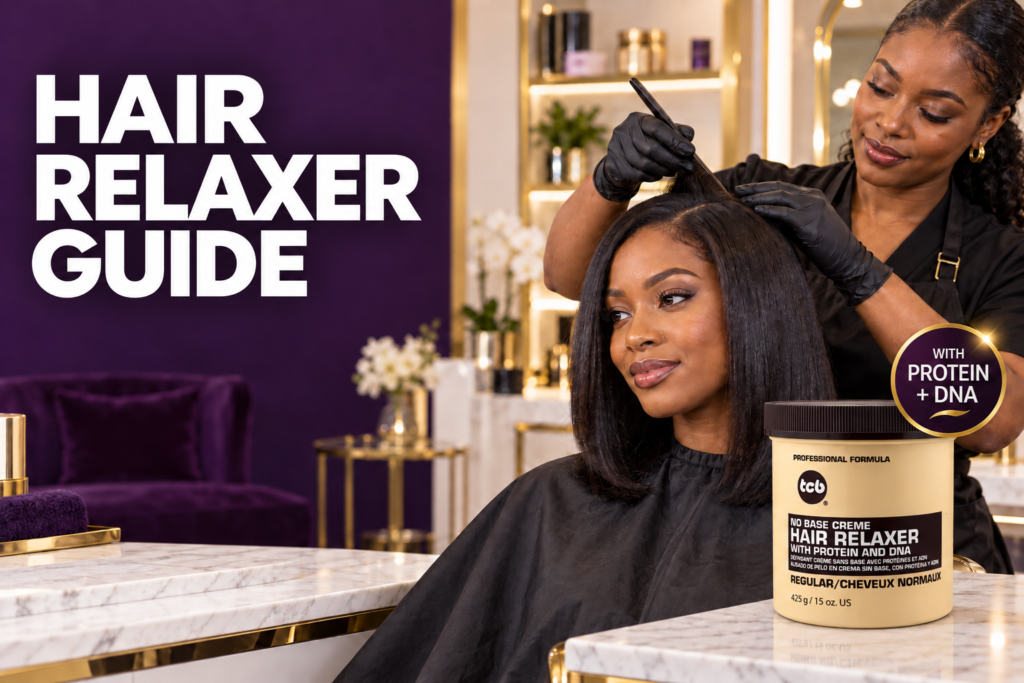
Hair Relaxer Guide: How to Choose the Right Type for Your Hair
A hair relaxer is used to chemically straighten or loosen the natural curl pattern of the hair. Because it changes the structure of the hair, choosing the right product requires careful consideration of your hair condition, texture, previous treatments and the instructions supplied with the product.
Beauty Fusion offers relaxer products from brands including TCB, Motions Salon Haircare and Dark and Lovely. This guide explains the differences between the available options, important safety considerations and how to care for chemically relaxed hair.
What Is a Hair Relaxer?
A hair relaxer is a chemical product formulated to straighten tightly curled or coiled hair by changing the bonds responsible for its natural pattern. Unlike temporary straightening with a hair dryer or straightener, chemical relaxing produces a longer-lasting change in the treated sections.
New hair growth will retain its natural texture. This means customers may choose to have a carefully timed root retouch rather than repeatedly treating the complete length of their hair.
Chemical relaxing is a significant process and should not be treated like ordinary conditioning or styling. Incorrect selection, overlapping or excessive processing may weaken the hair and irritate the scalp.
How Does a Hair Relaxer Work?
A hair relaxer changes the internal structure of the treated hair, allowing curls or coils to become straighter. The exact chemical system can differ between products, so instructions from one brand should not automatically be used with another.
Products may be supplied as:
- A single tub intended for professional or experienced use.
- A complete application kit.
- A no-lye relaxer system.
- Regular or normal strength.
- Super strength for resistant hair.
- A system containing additional conditioning or neutralising products.
Never assume that every tub or kit contains the same components. Read the product packaging carefully before opening or applying it.
Regular vs Super Hair Relaxer
Selecting the appropriate hair relaxer strength is one of the most important parts of the process. “Regular” and “Super” are not simply descriptions of how straight you want your hair to become.
Regular strength
Regular-strength products may be considered for hair that is not described as highly resistant. However, suitability depends on the individual product, hair condition and manufacturer’s directions.
Super strength
Super-strength products are generally positioned for resistant or coarse hair. A stronger formula is not automatically a better choice and should not be used simply to speed up the process.
Hair that is fine, damaged, heavily coloured, bleached or already overprocessed may not be suitable for chemical relaxing. When uncertain, seek advice from a qualified hair professional before choosing a strength.
Who Should Avoid Using a Hair Relaxer?
A hair relaxer should not be applied to a scalp that is scratched, irritated, inflamed, sore or damaged. Brushing, scratching or tightly styling the hair shortly before application may also leave the scalp more vulnerable to discomfort.
Extra caution is necessary if the hair:
- Has recently been bleached or lightened.
- Has been treated with another chemical straightener.
- Is breaking or excessively shedding.
- Feels unusually weak or brittle.
- Has already been relaxed along its length.
- Has recently been coloured with an incompatible product.
- Has an unknown chemical-treatment history.
Do not use a chemical treatment if its packaging says it is incompatible with your current hair condition or previous treatments. A professional assessment is the safest option when the treatment history is uncertain.
Hair Relaxer Options at Beauty Fusion
Beauty Fusion stocks products from several recognised haircare ranges. Each hair relaxer should be assessed according to its exact strength, format, intended user and packaging instructions.
TCB No Base Crème Relaxer Regular
TCB No Base Crème Hair Relaxer Regular 425g is available in a regular-strength format.
This product should be used only according to its complete label directions. “No Base” is part of the product name and should not be interpreted as permission to ignore the preparation or protective steps required by the manufacturer.
Before using it, check whether the regular strength is appropriate for your hair and confirm which supporting products are required for application, neutralisation and aftercare.
TCB No Base Crème Relaxer Super
Beauty Fusion also lists a TCB No Base Crème Hair Relaxer Super 212g.
The Super version should not be treated as interchangeable with the Regular version. Stronger products require particularly careful selection and application. Follow the processing, rinsing and neutralising directions printed on the exact product packaging.
Motions Salon Haircare Silkening Shine Relaxer System
The Motions Salon Haircare Silkening Shine Relaxer System Super is listed as a one-application Super relaxer system for resistant hair.
Because it is identified as Super strength, it should only be considered when this strength matches the hair type and condition described by the manufacturer. Do not extend the processing time or combine it with another straightening product in an attempt to increase the result.
Dark and Lovely Relaxer Options
Beauty Fusion stocks different Dark and Lovely products, including Regular and Beautiful Beginnings relaxer options. Check the complete name of the selected product because different kits may be designed for different hair needs or users.
Do not assume that every Dark and Lovely hair relaxer has the same strength, contents or application process. Beautiful Beginnings products should only be used according to their age guidance, warnings and adult-supervision requirements. When the packaging information is unclear, consult the manufacturer or a qualified professional before application.
How to Choose the Right Hair Relaxer
When selecting a hair relaxer, consider more than the brand name or price. Begin by evaluating the current condition of the hair and reviewing its chemical-treatment history.
Consider these factors:
Hair condition
Healthy-looking hair may still respond differently to chemical processing. Hair that is already weak, brittle or breaking should be professionally assessed before relaxing.
Natural texture
Products labelled Regular and Super may be intended for different levels of resistance. Choose only according to the manufacturer’s suitability guidance.
Previous treatments
Bleaching, colouring, texturising and previous relaxing can influence whether another chemical treatment is appropriate. Chemical compatibility must be checked before proceeding.
Kit contents
Some products are supplied as complete systems, while others may require separate supporting items. Verify what is included before starting the process.
Experience level
Applying a relaxer requires speed, precision and an understanding of processing. If you are inexperienced or cannot assess your hair confidently, book an appointment with a qualified stylist.
Important Hair Relaxer Safety Advice
Before using any hair relaxer, read every warning and instruction supplied with the product. Do not rely solely on a general blog post, social-media tutorial or instructions from a different brand.
Important precautions include:
- Follow the manufacturer’s allergy-testing instructions.
- Complete a strand test when directed.
- Wear suitable protective gloves.
- Protect the skin according to the product instructions.
- Avoid contact with the eyes.
- Never apply to an irritated or damaged scalp.
- Do not exceed the stated processing time.
- Do not apply to hair that has already been relaxed unless the directions specifically cover root retouching.
- Avoid overlapping the product onto previously treated lengths.
- Rinse and neutralise exactly as instructed.
- Keep chemical products away from children.
- Stop the process and rinse immediately if the instructions require this after severe burning or discomfort.
A mild sensation should never be used as a reason to deliberately wait longer than the stated time. If a concerning reaction occurs, follow the product’s emergency directions and seek appropriate medical assistance.
Application Mistakes to Avoid
Common mistakes may increase the possibility of an uneven result, breakage or scalp irritation. These include:
- Choosing Super strength without assessing the hair.
- Applying the product too slowly or unevenly.
- Starting on recently scratched or irritated areas.
- Overlapping previously relaxed sections.
- Combining incompatible chemical treatments.
- Leaving the product on longer than directed.
- Failing to neutralise properly.
- Using heated tools immediately without considering hair condition.
- Repeating the treatment too soon.
Professional application may be preferable for first-time users, resistant hair, corrective work or hair with a complicated chemical history.
How to Care for Relaxed Hair
Hair may require a more careful routine after chemical processing. Following a hair relaxer treatment, focus on gentle handling and products appropriate for chemically treated hair.
Useful aftercare practices include:
- Follow the complete post-treatment routine supplied with the product.
- Use a suitable shampoo and conditioner.
- Keep the hair appropriately moisturised.
- Detangle gently and avoid unnecessary pulling.
- Limit excessive heat styling.
- Use an appropriate heat protectant before heated tools.
- Avoid tight hairstyles that place stress on weakened areas.
- Trim damaged ends when needed.
- Monitor the hair for dryness, shedding or breakage.
- Allow sufficient new growth before considering a retouch.
If breakage, scalp irritation or unusual shedding continues, stop chemical processing and consult an appropriate professional.
Frequently Asked Questions
Does a relaxer permanently straighten hair?
It permanently changes the sections to which it is applied, but new growth retains its natural curl pattern. Previously treated lengths should not automatically be processed again.
What is the difference between Regular and Super strength?
Regular and Super refer to different product strengths or intended levels of hair resistance. Super is not suitable for everyone, and the selection should follow the manufacturer’s guidance.
Can I relax coloured or bleached hair?
Some chemical treatments may be incompatible. Do not apply a relaxer without checking the instructions for both products and assessing the hair’s condition. Professional advice is recommended.
Can I use a relaxer on an irritated scalp?
No chemical relaxer should be applied to a scratched, sore, inflamed or damaged scalp. Wait until the scalp has recovered and follow the product warnings.
Can I relax the complete length during a retouch?
New-growth application should avoid overlapping previously relaxed lengths unless the exact product directions state otherwise. Overlapping can increase the risk of overprocessing and breakage.
How often should I retouch relaxed hair?
There is no universal schedule suitable for everyone. Follow professional advice and the product guidance while considering the amount of new growth and overall hair condition.
Should I use a neutralising shampoo?
Use the neutralising or finishing products specified by the manufacturer. Correct neutralisation is an important part of many relaxer systems.
Explore Hair Relaxers at Beauty Fusion
Choosing a hair relaxer should begin with understanding your hair condition, treatment history and the difference between Regular and Super formulas. Compare the Relaxers and Texturisers available at Beauty Fusion, read the exact packaging instructions and seek professional help whenever you are unsure.