
How to Choose Foundation Shade for a Natural-Looking Finish
Finding the perfect foundation can be difficult, especially when different shades look almost identical in their packaging. A shade that looks perfect in the bottle may appear too orange, pink, pale or grey once applied to your skin.
Understanding how to choose foundation shade correctly can make a noticeable difference to your makeup routine. The right foundation should complement your natural complexion, blend smoothly with your neck and create an even-looking finish without an obvious colour difference.
Whether you’re new to makeup or refining your routine, learning how to choose foundation shade involves comparing undertones, checking jawline swatches and evaluating the finished colour in natural daylight.
This guide explains practical foundation matching techniques, common mistakes and useful tips for shopping online in the UK.
Understanding Your Skin Tone and Undertone
Before learning how to choose foundation shade, it’s essential to understand two important characteristics of your complexion: skin tone and undertone.
Skin tone describes the visible depth of your complexion, commonly categorised as fair, light, medium, tan, deep or rich.
Skin undertone refers to the subtle colours beneath your skin’s surface. Unlike your visible skin tone, your undertone generally remains relatively consistent.
There are four commonly discussed undertone groups:
- Warm undertones: Golden, yellow or peachy characteristics.
- Cool undertones: Pink, rosy, reddish or bluish characteristics.
- Neutral undertones: A balance of warm and cool tones.
- Olive undertones: Muted greenish or golden characteristics that can overlap with other undertones.
Two people with similar skin tones may need completely different foundation shades because their undertones differ.
Recognising this difference is an important foundation shade-matching tip.
How to Identify Your Skin Undertone
Identifying your undertone helps narrow down the shades most likely to complement your complexion.
Check Your Wrist Veins
Examine your wrist in natural daylight.
Blue or purple-looking veins may suggest cool undertones, while green-looking veins may suggest warmer undertones. A mixture of blue and green tones may suggest neutral undertones.
However, vein colour is not a reliable test for everyone. Lighting, pigmentation and skin depth can affect how veins appear.
Compare Gold and Silver Jewellery
Gold jewellery may complement warmer undertones, while silver may suit cooler undertones.
If both appear equally flattering, you might have neutral undertones.
Treat this as a general observation rather than a definitive skin undertone test.
Examine Your Skin in Daylight
Observe your clean face and neck near a window.
Look for consistent golden, rosy, neutral or olive characteristics without relying on temporary redness or changes caused by lighting.
If undertone clues are inconclusive, learning how to choose foundation shade through side-by-side jawline swatches can be more useful than relying on vein or jewellery tests alone.
How to Choose Foundation Shade That Matches Your Complexion
Foundation shade matching becomes easier when you follow a consistent process rather than selecting products based only on their packaging.
Step 1: Identify Your Skin Tone
Determine whether your complexion is fair, light, medium, tan or deep.
Compare foundation shades within that depth range before focusing on individual undertones.
Step 2: Compare Different Undertones
Select two or three shades close to your natural complexion.
Compare warm, cool, neutral or olive options where available.
When considering how to choose foundation shade, remember that matching your undertone is just as important as finding the correct shade depth.
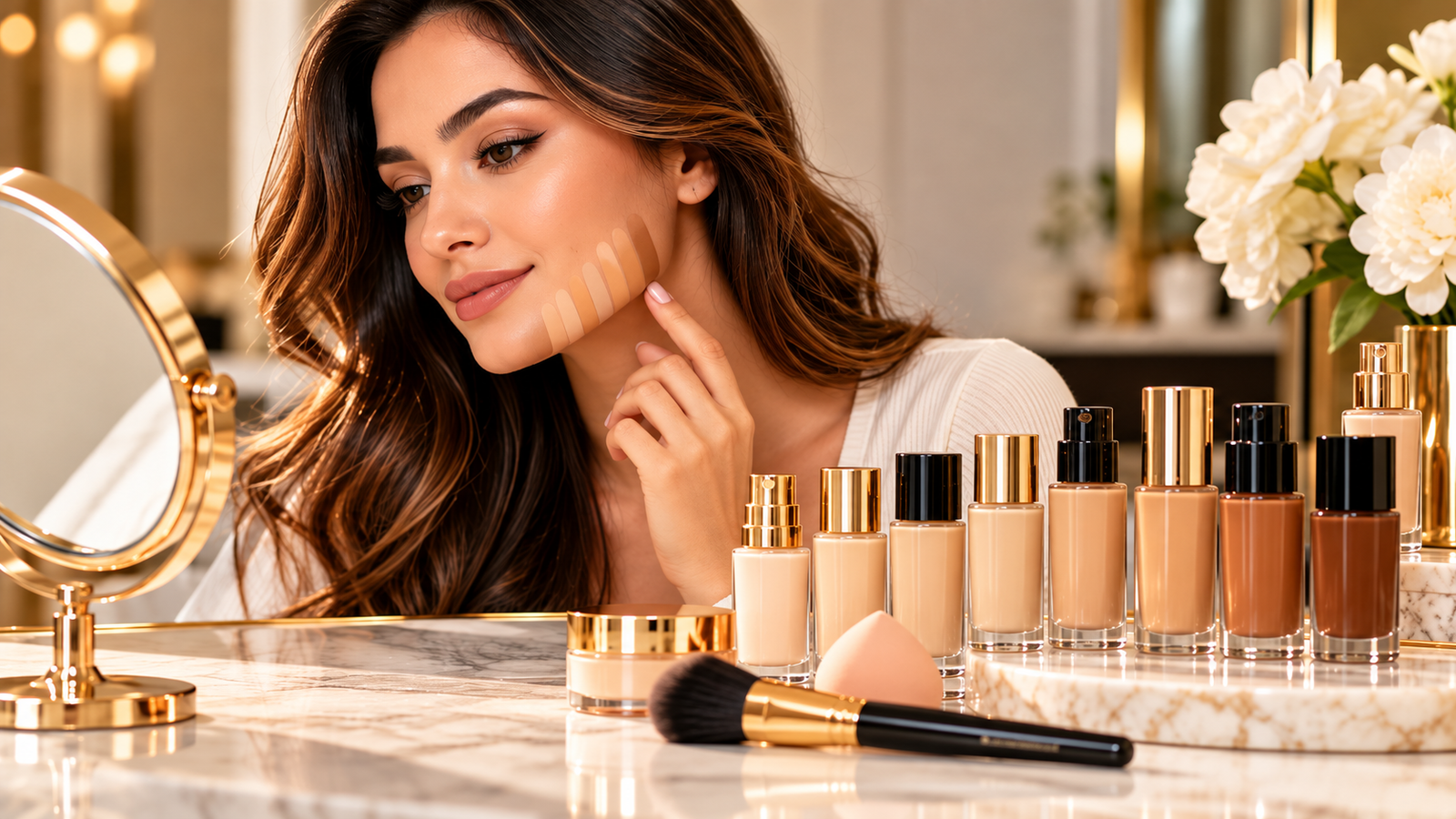
Step 3: Apply Foundation Along Your Jawline
Apply small swatches along your lower cheek and jawline.
The jawline provides a useful comparison between your face and neck, helping you identify shades that create a natural transition.
A good match should blend without leaving an obvious line of colour.
Step 4: Check Your Foundation in Natural Light
Indoor lighting can make the foundation appear warmer, cooler or darker than expected.
Check your swatches near a window or in indirect daylight.
If you’re researching how to choose foundation shade for everyday makeup, daylight testing is particularly useful because it reveals colour differences that artificial lighting can conceal.
Step 5: Allow the Formula to Set
Wait several minutes after applying each swatch.
Some foundation formulas change appearance as they dry, and certain products may look darker or warmer after application.
Checking the shade after it has settled helps you determine whether it matches your natural complexion.
How to Find Your Foundation Shade for Different Skin Tones
Every complexion has different shade-matching needs. Understanding your natural colouring helps you compare foundation options more accurately.
Foundation for Fair and Light Skin
Fair skin can have cool, warm, neutral or olive undertones.
Avoid assuming that the lightest available shade will automatically suit your complexion.
A foundation that is too pale may create a chalky appearance, while an incorrect undertone can look excessively yellow or pink.
Foundation for Medium and Tan Skin
Medium and tan complexions may contain golden, peach, neutral or olive tones.
Choose shades that blend with your natural colouring without appearing overly orange or dull.
Foundation for Deep and Rich Skin
When choosing foundation for dark skin tones, compare shades with appropriate depth and undertone options.
Deep complexions can have warm, cool, neutral or olive characteristics.
A poorly matched undertone may cause foundation to look grey or ashy.
For all skin depths, knowing how to choose foundation shade means comparing the finished result against your natural complexion rather than relying on shade names alone.
How to Choose Foundation Shade Online
Online beauty shopping offers access to different products and formulas, but choosing the correct colour without trying it first can be challenging.
Understanding how to choose foundation shade online starts with careful product research.
Review Foundation Shade Descriptions
Look for information about undertones, coverage and finish.
Shade names can vary between manufacturers, so don’t assume identical names indicate identical colours.
Compare Your Existing Foundation
If you already own a matching foundation, use its exact brand and shade as a reference when comparing alternatives.
Online shade-matching tools may provide suggestions, although their results are estimates rather than guaranteed matches.
Examine Product Swatches
Compare official brand photographs and swatches shown on skin tones similar to your own.
Remember that screens and photography can alter the appearance of colours.
Consider Your Skin Type
The right shade matters, but the formula should also suit your skin.
- Oily skin: Matte or oil-free formulas may be preferable.
- Dry skin: Hydrating or radiant formulas may feel more comfortable.
- Combination skin: Balanced formulas can help accommodate different areas.
- Normal skin: Choose according to your preferred finish and coverage.
Learning how to choose foundation shade before buying online can help you narrow your options and reduce the risk of selecting an unsuitable colour.
Foundation Formulas to Consider
After identifying your undertone and preferred finish, you can compare different types of foundation.
Some examples available through Beauty Fusion UK include:
- Vital Oil-Free Foundation Stick FS 08: A stick foundation format for targeted application and blending.
- Beauty Forever Crème-to-Powder Foundation: A cream-to-powder option with a powder-like finish.
- L.A. Girl Pro Coverage Illuminating Foundation: A liquid foundation with an illuminating finish.
These products illustrate different foundation formats, not specific recommendations for particular undertones.
Common Foundation Shade Matching Mistakes
Even after understanding how to choose foundation shade, certain mistakes can affect the final appearance of your makeup.
Testing Foundation on Your Hand
Your hands may have a different skin tone from your face.
Use your jawline for a more relevant comparison.
Ignoring Your Neck Colour
A foundation that looks suitable on your cheeks may contrast with your neck.
Aim for a balanced transition between the two areas.
Choosing a Foundation in Artificial Lighting
Warm or cool indoor lights can distort colours.
Whenever possible, examine your foundation in natural daylight.
Selecting a Shade That Is Too Light
Choosing a lighter foundation doesn’t necessarily create a brighter or more flattering result.
Instead, select a shade that complements your actual complexion.
Ignoring Foundation Dry-Down
Some formulas may change appearance after application.
Always assess the settled colour before deciding whether a shade matches.
Tips for a Natural-Looking Foundation Finish
Correct application is important once you’ve identified a suitable shade.
Start with clean, moisturised skin and allow your skincare products to settle.
Apply a small amount of foundation and blend gradually using a makeup sponge, brush or your fingers, depending on the formula.
Build coverage only where necessary rather than applying a thick layer immediately.
Pay attention to the sides of your nose, jawline and hairline, where uneven blending can become noticeable.
If your skin becomes shiny, a small amount of setting powder may help. For dry skin, avoid excessive powder that could emphasise flaky areas.
Combining effective application techniques with an understanding of how to choose foundation shade can help create a smoother, more natural-looking makeup result.
Frequently Asked Questions
How do I know which foundation shade matches my skin?
Apply two or three shades close to your complexion along your jawline. Compare them in natural daylight and choose the one that creates the most seamless transition between your face and neck.
How can I identify my foundation undertone?
Observe your natural skin colouring and compare foundation swatches with warm, cool, neutral and olive undertones. Vein and jewellery tests can provide clues, but they should not be treated as definitive.
How to choose foundation shade for oily skin?
First match the foundation to your skin tone and undertone. Then consider a matte or oil-free formula that suits your preferred coverage and finish.
How to choose foundation shade without testing it?
Compare the manufacturer’s shade descriptions, official swatches and your existing foundation shade. Online comparisons can help narrow your options, although an exact match cannot always be guaranteed.
Should my foundation match my face or neck?
Ideally, your foundation should create a balanced colour transition between your face and neck. Testing along the jawline is a useful way to compare both areas.
Why does my foundation look orange?
The shade may be too warm or too dark, or the formula may change appearance after drying. Try comparing shades with different undertones.
Can foundation shade change throughout the year?
Your visible skin tone can change with sun exposure or tanning. You may need different shade depths for different seasons, even though your underlying undertone usually stays relatively consistent.
Final Thoughts: Find Your Perfect Foundation Shade
Understanding how to choose foundation shade is an important step towards achieving a natural-looking makeup finish.
Identify your skin tone and undertone, compare different shades along your jawline and inspect the result in natural daylight. Choose a formula that feels comfortable and suits your preferred coverage.
Whether you’re buying foundation for the first time or searching for a better match, knowing how to choose foundation shade can help you shop more confidently and make informed decisions.
For other face makeup essentials, explore the Beauty Fusion UK Face Makeup collection.
One Response