Lace wig glue for sensitive skin UK shoppers can be difficult to choose, especially when you need a secure hold without unnecessary discomfort around the hairline.
You want an adhesive that keeps your lace secure, creates a natural-looking hairline and performs well throughout the day. At the same time, you do not want unnecessary pulling, dryness, redness, itching or uncomfortable product build-up around your hairline.
The problem is that many wig-glue guides focus only on maximum hold. They compare how long products last but overlook the condition of the skin underneath the wig, the correct application method and the importance of careful removal.
At Beauty Fusion, customers can explore sensitive, active and water-resistant lace adhesives alongside sprays, lace-melting products, wig caps and removal products. This guide explains how to compare them and choose an option that suits your skin, lifestyle and preferred type of wig installation.
What Is Lace Wig Glue for Sensitive Skin?
Lace wig glue is an adhesive designed to secure the lace section of a wig, frontal or closure close to the hairline.
A product labelled for sensitive skin is generally positioned as a gentler alternative for customers who find some regular adhesives uncomfortable. However, the words “sensitive skin” do not mean that a product is guaranteed to suit every person.
Individual reactions can depend on:
- The complete ingredient list
- Previous allergies or sensitivities
- The condition of the skin
- How much adhesive is applied
- How long the wig is worn
- Sweat and product build-up
- The removal method
- How frequently adhesive is used
- Whether the product touches damaged skin
Cosmetic products and adhesives can cause either irritation or an allergic contact reaction in some people. Contact dermatitis can involve itching, dryness, cracking, blistering or changes in skin colour.
The right product should therefore be selected carefully and used according to its packaging instructions.
Sensitive Skin, Irritation and Allergy Are Not the Same Thing
The phrase sensitive scalp is often used broadly, but there is an important difference between sensitivity, irritation and allergy.
Skin Sensitivity
Sensitive skin may react easily to friction, strong cosmetic products, fragrance, alcohol, prolonged wear or repeated adhesive removal.
Irritant Contact Dermatitis
This can happen when a substance directly irritates or damages the outer layer of the skin.
Possible triggers can include:
- Excessive adhesive
- Frequent installation and removal
- Applying glue to already irritated skin
- Strong cleansing products
- Pulling the lace away before the bond has dissolved
- Leaving product residue on the hairline
Allergic Contact Dermatitis
An allergic reaction involves the immune system responding to a particular ingredient or substance.
A product marketed for sensitive skin can still contain an ingredient that does not suit a particular person. The NHS advises seeking professional help for persistent, recurrent or severe symptoms rather than repeatedly using the suspected trigger.
Does Sensitive Lace Wig Glue Mean Hypoallergenic?
Not automatically.
Terms such as:
- Sensitive formula
- Skin-friendly
- Gentle
- Hypoallergenic
- Latex-free
- Waterproof
- Dermatologist tested
describe different product characteristics and should not be treated as interchangeable.
Always inspect the ingredient label and manufacturer’s warnings on the physical packaging.
The Beauty Fusion listing for the Wonder Lace Bond Sensitive 34ml formula currently identifies ingredients including acrylates copolymer, denatured alcohol, glycerine, propylene glycol, aloe extract, panthenol and fragrance. The ingredient list does not display natural rubber latex, but formulations and packaging information can change, so the physical label should remain the final reference.
The FDA has received reports of allergic reactions involving cosmetic products that can contain natural rubber latex, including some hair-bonding adhesives. Anyone with a known latex allergy should check the specific product label rather than assuming that every wig glue has the same formula.
The Different Types of Lace Wig Adhesive
Not every wig adhesive provides the same application or wearing experience.
Understanding the difference can prevent you from purchasing a product that is unsuitable for your installation.
1. Liquid Lace Wig Adhesive
Liquid glue is normally applied in a thin layer along the intended hairline area.
It can provide a stronger and longer-lasting bond than many temporary styling products, depending on the individual formula and application method.
A liquid adhesive may suit:
- Lace front wigs
- Closures
- Frontals
- Longer-wear installations
- Customers who want controlled layering
- Professional-style applications
For sensitive skin, thin and controlled application is especially important. Applying a large amount does not necessarily produce a cleaner or more comfortable result.
2. Lace Wig Adhesive Stick
An adhesive stick provides a smaller, more precise application format.
It can be useful for:
- Small hairline sections
- Touch-ups
- Travel
- Beginners who want greater control
- Avoiding a messy liquid application
- Shorter or targeted installations
Beauty Fusion currently lists a 4g Wonder Lace Bond Sensitive adhesive stick intended for precise application and touch-ups.
3. Wig Adhesive Spray
An adhesive spray distributes product over a wider area and can be quicker to apply than liquid glue.
Sprays may be used for:
- Temporary installations
- Quick application
- Hairline touch-ups
- Reinforcing selected areas
- Active or humid conditions, depending on the formula
A spray should not be assumed to be gentler merely because it feels lighter. Check its ingredient list, intended usage and product warnings.
4. Lace Melt Spray
A lace melt spray is usually used to help press and blend the lace into the hairline for a more seamless finish.
It is not always a direct replacement for a dedicated long-wear liquid adhesive.
Depending on the product, it may be used:
- As a finishing step
- For temporary hold
- To flatten lace edges
- With another compatible adhesive
- For minor touch-ups
Beauty Fusion stocks several lace-melting formats alongside its liquid adhesives and sprays.
5. Holding Gel
Holding gel can provide a more temporary alternative for customers who do not need a long-term bonded installation.
It may be easier to wash away than some professional-style liquid adhesives, although results depend on the exact formula.
6. Adhesive Remover
The removal product should be selected before the wig is installed—not after the hairline already feels uncomfortable.
A suitable remover helps soften and break down the bond so that the lace does not need to be pulled away forcefully.
What to Look for in Wig Glue for Sensitive Skin
The strongest product is not automatically the best product.
Consider the following factors before choosing.
Clear Ingredient Information
Read the full product label and check for ingredients that have caused you problems in the past.
Pay particular attention when you already know that your skin reacts to:
- Fragrance
- Alcohol
- Latex
- Certain preservatives
- Acrylate-based adhesives
- Strong cosmetic products
Appropriate Hold Level
Choose a hold level based on your actual routine.
A maximum-hold adhesive may be useful for:
- Extended wear
- Humid conditions
- Physical activity
- Special occasions
- Longer working days
A lighter or temporary product may be more appropriate for:
- Occasional wig wear
- Regular removal
- Short events
- Customers who want to rest their hairline frequently
- Beginners still practising installation
Removal Requirements
Ask how the product is intended to be removed.
Do not purchase a strong adhesive without also arranging an appropriate remover and enough time for careful removal.
Water and Sweat Resistance
Water-resistant and sweat-resistant formulas may suit active lifestyles, but they can also require more deliberate removal.
Choose them according to your environment rather than assuming that stronger is always better.
Application Control
Beginners may find a precision stick or controlled thin-layer application easier than a large aerosol or free-flowing liquid.
Current Condition of Your Hairline
Avoid applying wig adhesive over:
- Cuts
- Broken skin
- A rash
- Active irritation
- Blisters
- Recently damaged edges
- Skin that is already painful or inflamed
Give the area time to recover and seek appropriate professional advice when symptoms are persistent or severe.
What Most Sensitive Wig Glue Guides Miss
Many guides recommend a product and then immediately explain how to install the wig. They skip the factors that often determine whether the experience is comfortable.
“Sensitive” Does Not Mean Reaction-Proof
A sensitive formula may be designed with delicate skin in mind, but individual ingredients can still cause irritation or allergy.
Stop using the product when discomfort develops instead of covering the reaction with another layer of glue.
Stronger Hold Can Mean More Difficult Removal
A stronger bond may be useful during wear, but it needs enough remover and patience when the installation comes off.
Pulling against a strong bond can place unnecessary tension on the lace, skin and natural hairline.
Hairline Preparation Affects the Result
Oil, sweat, makeup, moisturiser and previous adhesive residue can prevent an even bond.
Applying more glue over an unclean surface can create additional build-up rather than improving the hold.
Several Thick Layers Are Not Always Better
Thick layers can take longer to dry and may produce uneven bonding, visible residue or a bulky hairline.
Use the quantity and number of layers recommended by the manufacturer.
Clinical Patch Testing Is Different from a Home Product Check
A cautious small-area compatibility check performed according to the product instructions may help identify obvious discomfort before a full installation, but it is not the same as medical patch testing.
Clinical patch testing is carried out by dermatology professionals and assessed over several days to investigate contact allergy.
People with a history of significant adhesive reactions should speak with a healthcare professional rather than relying only on an informal home test.
Removal Is Part of the Installation
A successful wig installation is not complete until the lace has been removed without aggressive pulling.
Your remover, cleansing routine and time allowance are as important as your glue.
How to Prepare Your Hairline Before Applying Wig Glue
How to Choose Lace Wig Glue for Sensitive Skin UK Shoppers Can Trust
Correct preparation helps create a cleaner bond and reduces unnecessary product build-up.
Step 1: Check the Skin
Examine the intended application area.
Do not continue when the skin is broken, painful, inflamed or actively reacting to another product.
Step 2: Protect Your Natural Hair
Secure the natural hair and edges away from the adhesive area.
Glue should not be spread carelessly through the natural hairline.
Step 3: Remove Oil and Residue
Clean the intended area according to the adhesive manufacturer’s instructions.
The skin should be free from:
- Makeup
- Heavy moisturiser
- Hair oil
- Sweat
- Old adhesive
- Styling residue
Step 4: Let the Area Dry
The hairline should be fully dry before adhesive is applied.
Applying glue to damp or oily skin can affect the bond and encourage uneven product build-up.
Step 5: Use a Compatible Skin Protector When Appropriate
Some wig systems include a skin-protector product designed to create a barrier and remove oil before adhesive application.
EBIN’s installation guidance recommends cleaning the hairline, applying a compatible skin protector and then applying a thin coat of adhesive.
Always confirm that the protector and adhesive are intended to be used together.
How to Apply Lace Wig Glue Correctly
Follow the directions on your chosen product because drying times and application methods can vary.
A general application sequence is:
1. Position the Wig First
Check the placement before applying adhesive.
Make sure the lace reaches the intended hairline comfortably without excessive pulling or tension.
2. Apply a Thin, Even Layer
Apply the adhesive only to the intended area.
Avoid thick patches and uneven edges.
3. Allow the Adhesive to Become Tacky
Do not place the lace immediately onto wet white glue unless the product specifically instructs you to do so.
Many lace adhesives are designed to become tacky or turn clearer before the lace is pressed into position.
4. Add Another Thin Layer Only When Required
Where the manufacturer recommends multiple layers, allow each layer to reach the correct stage before adding the next one.
5. Position the Lace Carefully
Place the lace without dragging it repeatedly through the adhesive.
Press it into position gently and evenly.
6. Secure While Drying
Use an appropriate melt band or similar installation tool when suitable.
Avoid tying it so tightly that it becomes painful or leaves excessive pressure around the hairline.
7. Let the Bond Set
Give the adhesive enough time to dry before styling, sweating or exposing it to moisture.
Beauty Fusion’s Wonder Lace Bond product instructions similarly advise applying a thin layer to clean, dry skin, waiting until tacky and then pressing the lace into place.
Common Lace Wig Glue Mistakes
Applying Glue Directly Into the Natural Edges
Repeated adhesive contact and forceful removal can place unnecessary stress on fragile hair.
Keep the application controlled and follow the product instructions.
Installing Over Makeup or Oil
Foundation, moisturiser and hair oil may interfere with an even bond.
Applying the Lace While the Glue Is Too Wet
This can produce slipping, white residue and an untidy finish.
Using Too Much Product
More adhesive can mean a longer drying time and harder clean-up.
Mixing Incompatible Products
Using several adhesives, gels, sprays and oils together can create unpredictable results.
Use products designed to work together.
Ignoring Burning or Itching
Discomfort is not proof that the adhesive is working.
Remove the product carefully when a reaction develops and avoid reapplying it to irritated skin.
The NHS explains that contact dermatitis may cause itching, dryness, cracking or blistering after exposure to an irritating or allergenic substance.
Pulling the Wig Off Quickly
Forceful removal may damage the lace, irritate the skin and place tension on the natural hairline.
Beauty Fusion’s Lace Adhesive Options
Beauty Fusion currently carries several EBIN Wonder Lace Bond products for different installation preferences.
1. Wonder Lace Bond Extreme Firm Hold Sensitive – 34ml
This liquid adhesive is the most directly relevant Beauty Fusion product for the keyword lace wig glue for sensitive skin UK.
The product is listed as:
- A 34ml liquid adhesive
- Designed for lace wigs, frontals and closures
- An extreme-firm-hold option
- A fast-drying formula
- Intended for customers seeking a sensitive-skin variant
The listed ingredient information includes acrylates copolymer, denatured alcohol, glycerine, propylene glycol, aloe extract, panthenol and fragrance. Customers with known sensitivities should inspect the physical label before application.
Best suited to: Customers seeking a stronger liquid bond in a formula specifically positioned for sensitive skin.
Important consideration: Sensitive positioning does not guarantee compatibility for every person.
2. Wonder Lace Bond Adhesive Stick Sensitive – 4g
This compact adhesive stick offers more precise application than a standard liquid bottle.
Beauty Fusion positions it for:
- Lace wigs
- Closures
- Frontals
- Hairline touch-ups
- Travel
- Controlled application
Its compact size can be useful for customers who do not want to handle a larger bottle during small corrections.
Best suited to: Travel, small hairline sections, beginners and targeted touch-ups.
3. Wonder Lace Bond Active – 34ml
The Active formula is positioned for stronger performance during heat, humidity, perspiration and an active routine. When comparing lace wig glue for sensitive skin UK options, always check the current ingredient label and removal instructions.
It is not the same as the dedicated Sensitive variant.
Beauty Fusion lists it as a 34ml liquid adhesive intended for customers who prioritise firm hold during active wear.
Best suited to: Active lifestyles and customers whose main priority is sweat and humidity resistance.
Important consideration: Customers with sensitive skin should compare the ingredient list rather than assuming the Active formula will perform like the Sensitive version.
4. Wonder Lace Bond Sports Edition – 34ml
The Sports Edition is marketed as a water- and sweat-resistant option for workouts, outdoor activity and humid conditions.
Best suited to: Exercise, outdoor wear and high-activity situations.
Important consideration: A water-resistant bond may require more careful removal than a temporary installation.
5. Wonder Lace Bond Adhesive Spray Active – 420ml
This aerosol format provides a wider, quicker application than a precision liquid adhesive.
Beauty Fusion lists it as a fast-drying, active-wear adhesive spray designed for sweat and humidity resistance.
Best suited to: Customers who prefer aerosol application, quicker installation and larger-format use.
6. Wonder Weave Bond Remover Oil – 237ml
Removal should never be treated as an afterthought.
Beauty Fusion’s remover-oil listing advises applying the product to the bonded area, allowing it time to soften the adhesive and then separating the wig or weave carefully once the bond has loosened.
Best suited to: Breaking down bonding residue during wig or weave removal.
Important consideration: Confirm that the remover is suitable for the exact adhesive and installation method you have used.
How to Remove Lace Wig Glue Without Damaging Your Edges
Step 1: Do Not Pull the Lace
Begin only when you have enough time to remove the installation patiently.
Step 2: Apply the Appropriate Remover
Apply the remover to the bonded area according to its directions.
Do not flood the eyes or face with product.
Step 3: Allow the Bond to Soften
Give the remover time to work.
Strong adhesive may require repeated application.
Step 4: Test a Small Section
Gently check whether the lace begins to release.
When it resists, apply more remover and wait rather than pulling harder.
Step 5: Lift Gradually
Work slowly from one section to another.
Support the lace and avoid sudden tension on the natural hairline.
Step 6: Remove Remaining Residue
Clean the skin and lace using products appropriate for the adhesive and wig material.
Step 7: Cleanse and Rest the Hairline
Remove residual remover and adhesive, then allow the skin to recover before the next bonded installation.
When the area becomes persistently itchy, painful, blistered or inflamed, discontinue the suspected product and seek appropriate medical advice.
How to Make Your Lace Installation Last Longer
A longer-lasting installation depends on more than selecting the strongest adhesive.
Begin with Clean, Dry Skin
Oil and residue can weaken the bond.
Apply Thin Layers
Even layers usually create a cleaner foundation than one thick coat.
Let Each Layer Dry Correctly
Rushing the drying stage can cause lifting and visible residue.
Avoid Immediate Moisture
Give the bond enough time to set before workouts, shower steam or heavy sweating.
Protect the Hairline at Night
Use an appropriate satin or silk scarf and avoid excessive friction around the lace.
Do Not Pick at Lifting Areas
Picking can damage both the lace and the skin.
Clean and retouch only according to the product instructions.
Remove Before the Hairline Becomes Uncomfortable
Do not extend an installation simply because the adhesive still feels strong.
Persistent tightness, itching or irritation is a reason to check and remove the installation carefully.
Can You Wear Lace Wig Glue Every Day?
Some people use adhesive frequently, but daily or repeated use requires careful attention to skin condition, cleansing and removal.
Consider alternating between:
- Bonded lace installations
- Glueless wigs
- Adjustable wig bands
- Wig grips
- Temporary sprays
- Shorter-wear products
This may allow the hairline and skin periods without strong adhesive.
A glueless option can be particularly useful when your skin is already irritated or when you want to remove your wig every evening.
Where to Buy Lace Wig Glue in the UK
Beauty Fusion offers lace adhesives, sprays, melting products, remover oils, wig caps and other installation accessories online through its Wig & Extension Accessories collection.
Beauty Fusion offers lace wig glue for sensitive skin UK customers can order online or explore at the Birmingham store.
Customers can also visit the Beauty Fusion store at:
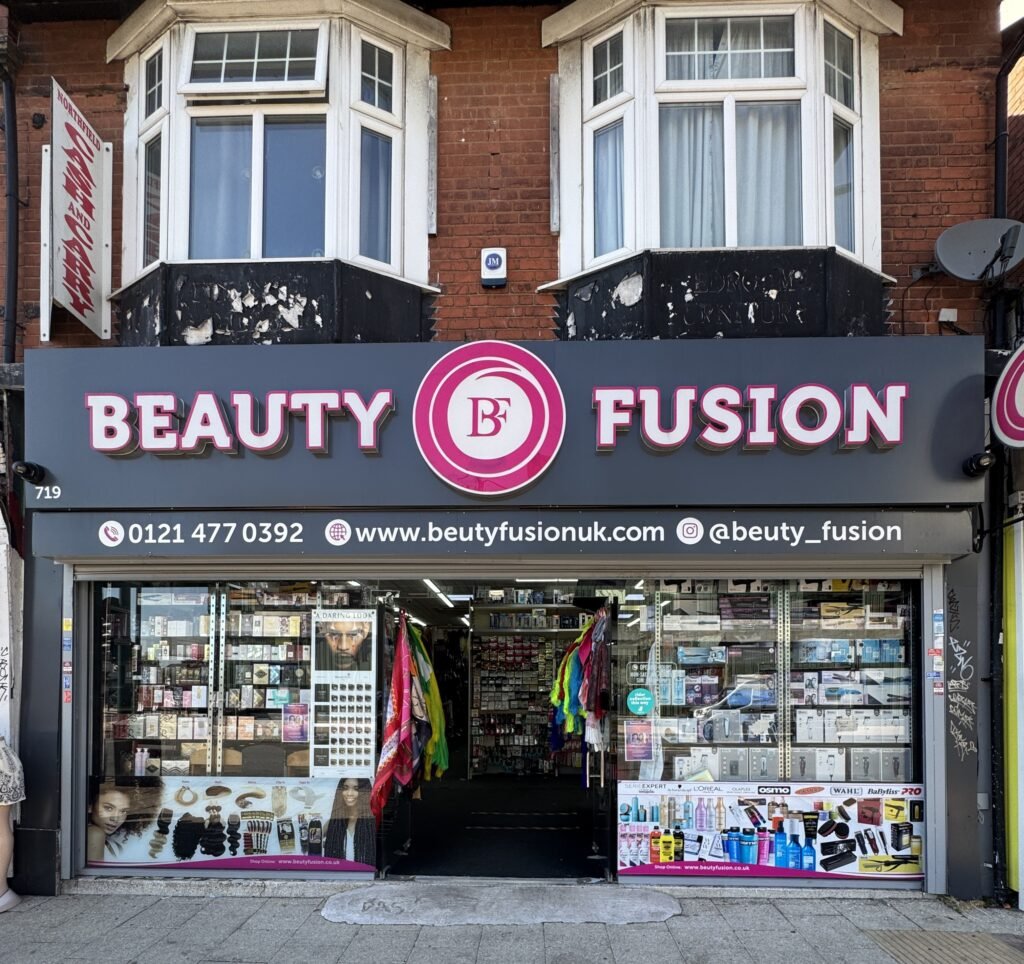
Beauty Fusion
719 Bristol Road South
Northfield
Birmingham
B31 2JT
The official store page lists the Northfield, Birmingham location and contact details for checking products before visiting.
Product selection and stock can change, so check the website or contact the store when you need a particular formula or size.
Frequently Asked Questions
What is the best lace wig glue for sensitive skin in the UK?
The best option depends on your ingredient sensitivities, preferred hold, wearing duration and removal routine.
What is the best lace wig glue for sensitive skin UK customers can buy?
Beauty Fusion stocks dedicated Wonder Lace Bond Sensitive liquid and stick formats. Check the current ingredient label and follow the manufacturer’s instructions before completing a full installation.
Can sensitive wig glue still cause irritation?
Yes. A sensitive formula is not guaranteed to suit every user.
Cosmetics and adhesives can cause irritation or allergic reactions in some people. Stop using the product if discomfort develops and seek professional advice for persistent or severe symptoms.
Is lace wig glue safe for the natural hairline?
It should be applied carefully according to the product instructions.
Avoid coating the natural edges unnecessarily, applying over damaged skin or pulling the lace away before the adhesive has dissolved.
Is wig adhesive spray better than glue?
Neither format is universally better.
Liquid adhesive may offer more controlled layering and longer wear, while spray can be quicker and suitable for temporary installation or touch-ups. Choose according to the formula and your routine.
Is water-resistant wig glue suitable for sensitive skin?
Water resistance describes how the adhesive performs around moisture and sweat; it does not automatically describe its suitability for sensitive skin.
Check whether the individual product is specifically labelled for sensitive skin and inspect the complete ingredient list.
How many layers of wig glue should I use?
Use the quantity and number of layers stated by the manufacturer.
Avoid assuming that additional layers will always improve the installation.
Why does my wig glue turn white?
Possible causes include applying the lace before the adhesive is ready, using excessive product, applying over oil or exposing the bond to moisture before it has properly set.
Can I apply wig glue over makeup?
Makeup and skincare products can affect the bond.
The intended adhesive area should normally be clean and dry, subject to the manufacturer’s directions.
How should I remove strong lace wig glue?
Apply a compatible remover, allow the adhesive to soften and release the lace gradually.
Never pull forcefully against a bond that has not dissolved.
How long should I wait before applying the lace?
Wait until the adhesive reaches the stage specified by the manufacturer, commonly tacky or clearer rather than completely wet.
Drying time varies between formulas.
Can I use lace wig glue on irritated skin?
Do not apply adhesive over broken, blistered, painful or actively inflamed skin.
Allow the area to recover and obtain medical advice when symptoms are persistent, recurrent or severe.
Where can I buy wig adhesive in Birmingham?
Beauty Fusion has a physical store at 719 Bristol Road South, Northfield, Birmingham B31 2JT, alongside its UK online shop.
Final Thoughts
Choosing lace wig glue for sensitive skin in the UK requires more than looking for the strongest hold.
The right lace wig glue for sensitive skin UK shoppers choose should match their skin, required hold and removal routine.
A suitable adhesive should match your skin, installation method, wearing time and lifestyle. The product must also have a manageable removal process.
Start with clean and healthy skin, examine the ingredient label, apply thin controlled layers and stop using the product when irritation develops. Most importantly, never pull a strongly bonded lace wig away from the hairline without first softening the adhesive.
Beauty Fusion offers sensitive liquid and stick adhesives alongside active, sports, spray and remover options. Explore the current wig-accessories range online or visit the Birmingham store to compare the available products.